Join LuxCitizenship for our 10-Year Anniversary Celebration | RSVP Here


The Argentine-Luxembourgers

As of December 31st, 2024, 541 Luxembourgish citizens were living in Argentina. Who are these Argentine-Luxembourgers? Explore this interactive study to find out.

Updated: January 9th, 2024
Written by: Daniel Atz with Lauren Lowell

Em Português 🇧🇷 | En Español 🇦🇷

Share this Article:

To turn on the subtitles, please press the play button, followed by the CC icon. To change languages, click the gear icon and “Subtitles/CC”.

Background

Since 2018, LuxCitizenship has been producing interactive case studies on the new Luxembourgish dual citizens. After LuxCitizenship’s trip to Argentina to meet with the Argentine-Luxembourger 🇱🇺🇦🇷 community in April 2023, we were driven to expand our case study of the 3rd largest Luxembourgish dual citizen community in the Americas.
In its first edition, the 2024

Argentine-Luxembourgers study is based on data from Luxembourg’s Ministry of Justice, National Archives, Data.Public.Lu, CTIE, STATEC, and our own study of 124 Luxembourgish dual citizens and 28 Luxembourgish ancestors.

We think it’s high time to start learning about this population. So we asked for them to speak for themselves. The results follow.
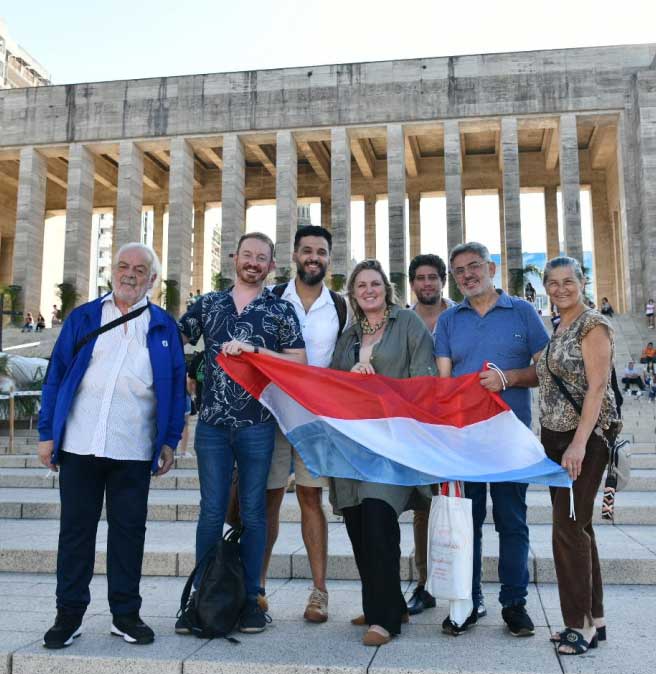
Group of Argentine-Luxembourg dual citizens holding Luxembourg flag in front of landmark.

Context

In 2008, the new Luxembourg Nationality Act introduced the concept of dual citizenship in Luxembourg. Since then, thousands of people have obtained Luxembourgish dual citizenship through ancestry.

Ancestor Overview

Let’s quickly review the data from our study of the Argentine-Luxembourgers’ ancestors.

Where We Last Left Off

In our ancestor study, we established that our 124 dual citizens had 28 Luxembourgish ancestors. These ancestors mostly came from Luxembourg in the late-1800s, and the largest group settled in Benito Juárez, Buenos Aires Province.

Ancestor Canton of Birth57.1% of the ancestors were born in the cantons of Grevenmacher, Luxembourg and Esch-sur-Alzette, with Grevenmacher the most common at 21.4%.
Ancestor Canton of BirthMap of Luxembourg: Ancestor Canton of Birth. Values by canton: Grevenmacher 21.4%; Luxembourg 17.9%; Esch-sur-Alzette 17.9%; Capellen 10.7%; Clervaux 10.7%; Diekirch 10.7%; Echternach 7.1%; Mersch 3.6%.
Share of Ancestors3.6%21.4%

Source: LuxCitizenship study of 28 ancestors of 124 Argentine dual citizens · 2024

Ancestor Province of Passing48.1% of the ancestors with a known place of death passed away in Buenos Aires Province, followed by Entre Ríos at 25.9% and Santa Fe at 14.8%.
Ancestor Province of PassingMap of Argentina: Ancestor Province of Passing. Values by province: Buenos Aires 48.1%; Entre Ríos 25.9%; Santa Fe 14.8%; La Pampa 3.7%. Marked Locations: City of Buenos Aires; Copetonas; Esperanza.
Share of Ancestors3.7%48.1%Towns of Passing

Source: LuxCitizenship study of 28 ancestors of 124 Argentine dual citizens; 27 with a known place of death · 2024

Dual Citizen Introduction

Who are the Argentine-Luxembourgers who participated in this study?

Now Meet Their Descendants

Each of these 28 Luxembourgish ancestors started their own families in Argentina. Today, their 124 descendants included in this study cover a wide range of demographics and walks of life.

Respondent Gender54% of respondents are women and 46% are men.
Respondent GenderPie chart: Respondent Gender. Male: 46%; Female: 54%.46%54%Male46%Female54%

Source: LuxCitizenship study of 124 Argentine dual citizens · 2024

Respondent Age40–49 is the largest age group among respondents at 30%, and 36% are aged 20 to 39.
Respondent AgeBar chart: Respondent Age. 18–19: 6%; 20–29: 18%; 30–39: 18%; 40–49: 30%; 50–59: 12%; 60–69: 9%; 70+: 7%.18–196%20–2918%30–3918%40–4930%50–5912%60–699%70+7%

Source: LuxCitizenship study of 124 Argentine dual citizens · 2024

Generations Removed from Ancestor48% of respondents are three generations removed from their Luxembourgish ancestor, the most common gap.
Generations Removed from AncestorBar chart: Generations Removed from Ancestor. 1 Generation: 5%; 2 Generations: 15%; 3 Generations: 48%; 4 Generations: 27%; 5 Generations: 5%.1 Generation5%2 Generations15%3 Generations48%4 Generations27%5 Generations5%

Source: LuxCitizenship study of 124 Argentine dual citizens · 2024

The Argentine-Luxembourgers: Where Are They From?

Much like their Luxembourgish ancestors, many of our study’s respondents call the provinces of Santa Fe and Buenos Aires home. 65.3% of all our respondents live in these two provinces alone, which was the place of immigration for 57.1% of the ancestors we studied.

Where Respondents Were Born38.7% of respondents were born in Santa Fe and 31.5% in Buenos Aires, and Esperanza is the most common city of birth at 26.4%.
Where Respondents Were BornMap of Argentina: Where Respondents Were Born. Values by province: Santa Fe 38.7%; Buenos Aires 31.5%; Ciudad de Buenos Aires 31.5%; Entre Ríos 19.8%; Río Negro 3.6%; Formosa 1.8%; Chubut 1.8%; La Pampa 0.9%; Córdoba 0.9%; Salta 0.9%. Marked Locations: Esperanza; Paraná; Rosario.
Share of Respondents0.9%38.7%Top Cities of Birth

Source: LuxCitizenship study of 124 Argentine dual citizens; province of birth, respondents who shared it · 2024

Where Respondents Live Today65.3% of all respondents live in Santa Fe or Buenos Aires, and Esperanza is the most common city of residence at 23.5%.
Where Respondents Live TodayMap of Argentina: Where Respondents Live Today. Values by province: Buenos Aires 41.3%; Ciudad de Buenos Aires 41.3%; Santa Fe 33%; Entre Ríos 16.5%; Río Negro 2.8%; Chubut 1.8%; Formosa 1.8%; La Pampa 0.9%; Córdoba 0.9%; Mendoza 0.9%. Marked Locations: Esperanza; Buenos Aires; Paraná.
Share of Respondents0.9%41.3%Top Cities of Residence

Source: LuxCitizenship study of 124 Argentine dual citizens; province of residence, respondents living in Argentina who shared it · 2024

Mobility

Where do the American-Luxembourgers live today, and how does it relate to their ancestors?

How “Close to Home” Are the Argentine-Luxembourgers?

27% of respondents no longer live in the province where their Luxembourgish ancestor resided. Of these same respondents, 25% of them also do not live in the state where they were born.

While this is a comparable percentage to the Brazilian-Luxembourgers, it is 1.9 times lower than that of the American-Luxembourgers. Overall, this is a moderately mobile population.

Born in Province Where Ancestor Lived77.9% of respondents were born in the province where their Luxembourgish ancestor lived.
Born in Province Where Ancestor LivedPie chart: Born in Province Where Ancestor Lived. Yes: 77.9%; No: 22.1%.78%22%Yes77.9%No22.1%

Source: LuxCitizenship study of 124 Argentine dual citizens; 113 respondents with a known ancestor province · 2024

Live in Same Province as Ancestor73.5% of respondents still live in the province where their Luxembourgish ancestor lived, and 26.5% have moved away.
Live in Same Province as AncestorPie chart: Live in Same Province as Ancestor. Yes: 73.5%; No: 26.5%.74%27%Yes73.5%No26.5%

Source: LuxCitizenship study of 124 Argentine dual citizens; 83 respondents with a known ancestor province · 2024

Born and Live in the Same Province75% of respondents still live in the province where they were born, comparable to the Brazilian respondents and well above the American respondents.
Born and Live in the Same ProvincePie chart: Born and Live in the Same Province. Yes: 75%; No: 25%.75%25%Yes75%No25%

Source: LuxCitizenship study of 124 Argentine dual citizens · 2024

Where Have They Moved?

Despite the deep roots that Argentine-Luxembourgers have in specific regions in Argentina, some respondents have relocated during their lifetimes. The most common trend we see is a shift from rural to urban areas, particularly Buenos Aires.

How Respondents Moved Since BirthBuenos Aires gained the most respondents between birth and today (+9.8%), while Santa Fe (−5.7%) and Entre Ríos (−3.3%) lost the most.
How Respondents Moved Since BirthMap of Argentina: How Respondents Moved Since Birth. Values by province: Buenos Aires +9.8%; Ciudad de Buenos Aires +9.8%; Córdoba +0.9%; Mendoza +0.9%; Corrientes 0%; La Pampa 0%; Formosa 0%; Chubut 0%; Catamarca 0%; Salta 0%; Santiago del Estero 0%; Río Negro -0.9%; Entre Ríos -3.3%; Santa Fe -5.7%.
Net Change in Respondents-9.8%+9.8%No ChangeNot Included

Source: LuxCitizenship study of 124 Argentine dual citizens; net change between province of birth and province of residence · 2024

Respondents Living Abroad, by Country46.2% of respondents living abroad live in Spain, followed by Luxembourg and Germany at 15.4% each.
Respondents Living Abroad, by CountryBar chart: Respondents Living Abroad, by Country. Spain: 46.2%; Luxembourg: 15.4%; Germany: 15.4%; Portugal: 7.7%; Italy: 7.7%; Switzerland: 7.7%.Spain46.2%Luxembourg15.4%Germany15.4%Portugal7.7%Italy7.7%Switzerland7.7%

Source: LuxCitizenship study of 124 Argentine dual citizens; 13 respondents living outside Argentina · 2024

While the majority of our Argentine-Luxembourger survey respondents currently live in Argentina, 16.9% of respondents reported having lived abroad during their lifetimes.

Family & Education

Where do the American-Luxembourgers live today, and how does it relate to their ancestors?

About the Dual Citizen Families

41.9% of all Argentine-Luxembourger dual citizens surveyed indicated that they are married. In addition, 58.9% of all respondents reported that they have children. The largest group among them has two children, reflecting a demographic trend common in Argentina.

Married41.9% of respondents are married.
MarriedPie chart: Married. Yes: 41.9%; No: 58.1%.42%58%Yes41.9%No58.1%

Source: LuxCitizenship study of 124 Argentine dual citizens · 2024

Number of Children58.9% of respondents have children, and among those who gave the number, two is the most common at 43.1%.
Number of ChildrenBar chart: Number of Children. 1 Child: 13.9%; 2 Children: 43.1%; 3 Children: 29.2%; 4+ Children: 13.9%.1 Child13.9%2 Children43.1%3 Children29.2%4+ Children13.9%

Source: LuxCitizenship study of 124 Argentine dual citizens; 72 respondents with children who gave the number · 2024

Education Level

36.3% of respondents indicated that their highest level of education was high school. In addition, 56.5% of all respondents have pursued higher education. This shows a highly educated populace among Argentine-Luxembourgers.

Education Level Achieved56.5% of respondents pursued education beyond high school, and 38.7% hold a bachelor's degree, the most common level.
Education Level AchievedBar chart: Education Level Achieved. Less Than High School: 3.2%; High School: 36.3%; Some College: 0.8%; Trade School / Further Education: 1.6%; Teaching Degree: 1.6%; Bachelor: 38.7%; Postgraduate Specialization: 6.5%; Masters: 3.2%; Doctorate: 1.6%; Other: 2.4%.Less Than HighSchool3.2%High School36.3%Some College0.8%Trade School /Further Education1.6%Teaching Degree1.6%Bachelor38.7%PostgraduateSpecialization6.5%Masters3.2%Doctorate1.6%Other2.4%
Education Level AchievedBar chart: Education Level Achieved. Less Than High School: 3.2%; High School: 36.3%; Some College: 0.8%; Trade School / Further Education: 1.6%; Teaching Degree: 1.6%; Bachelor: 38.7%; Postgraduate Specialization: 6.5%; Masters: 3.2%; Doctorate: 1.6%; Other: 2.4%.Less Than High School3.2%High School36.3%Some College0.8%Trade School / Further Education1.6%Teaching Degree1.6%Bachelor38.7%Postgraduate Specialization6.5%Masters3.2%Doctorate1.6%Other2.4%

Source: LuxCitizenship study of 124 Argentine dual citizens; 5 respondents did not answer · 2024

Professional Career

Much like the Brazilian-Luxembourgers, the largest percentage of our Argentine respondents work for the government as civil servants or contract employees. On the contrary, much less of the Argentine-Luxembourgers report working in healthcare than their American cousins.

Of our Argentina respondents, 29.8% declined to answer the question about if they were actively working or what is their professional career path. By comparison, only 20.5% in Brazil and 5.8% in the US declined to answer this question.

Most Recent Industry of EmploymentGovernment is the most common industry among respondents at 14.9%, and 29.8% of Argentine respondents declined to share their career, more than in Brazil or the United States.
Most Recent Industry of EmploymentBar chart: Most Recent Industry of Employment. Government: 14.9%; Service & Retail: 10.3%; Energy & Utilities: 5.7%; Construction & Real Estate: 4.6%; Education: 4.6%; Food & Agriculture: 4.6%; Health: 4.6%; Consulting & Professional Services: 3.4%; Legal: 3.4%; Fashion & Consumer Goods: 2.3%; Pharma & MedTech: 2.3%; Tech: 2.3%; Journalism: 1.1%; Non-Profit & Religious: 1.1%; Tourism: 1.1%; Retired & Unemployed: 33.3%.Government14.9%Service & Retail10.3%Energy & Utilities5.7%Construction & RealEstate4.6%Education4.6%Food & Agriculture4.6%Health4.6%Consulting &Professional Servic…3.4%Legal3.4%Fashion &Consumer Goods2.3%Pharma & MedTech2.3%Tech2.3%Journalism1.1%Non-Profit &Religious1.1%Tourism1.1%Retired &Unemployed33.3%
Most Recent Industry of EmploymentBar chart: Most Recent Industry of Employment. Government: 14.9%; Service & Retail: 10.3%; Energy & Utilities: 5.7%; Construction & Real Estate: 4.6%; Education: 4.6%; Food & Agriculture: 4.6%; Health: 4.6%; Consulting & Professional Services: 3.4%; Legal: 3.4%; Fashion & Consumer Goods: 2.3%; Pharma & MedTech: 2.3%; Tech: 2.3%; Journalism: 1.1%; Non-Profit & Religious: 1.1%; Tourism: 1.1%; Retired & Unemployed: 33.3%.Government14.9%Service & Retail10.3%Energy & Utilities5.7%Construction & Real Estate4.6%Education4.6%Food & Agriculture4.6%Health4.6%Consulting & ProfessionalServices3.4%Legal3.4%Fashion & Consumer Goods2.3%Pharma & MedTech2.3%Tech2.3%Journalism1.1%Non-Profit & Religious1.1%Tourism1.1%Retired & Unemployed33.3%
Most Recent Industry of EmploymentBar chart: Most Recent Industry of Employment. Government: 14.9%; Service & Retail: 10.3%; Energy & Utilities: 5.7%; Construction & Real Estate: 4.6%; Education: 4.6%; Food & Agriculture: 4.6%; Health: 4.6%; Consulting & Professional Services: 3.4%; Legal: 3.4%; Fashion & Consumer Goods: 2.3%; Pharma & MedTech: 2.3%; Tech: 2.3%; Journalism: 1.1%; Non-Profit & Religious: 1.1%; Tourism: 1.1%; Retired & Unemployed: 33.3%.Government14.9%Service & Retail10.3%Energy & Utilities5.7%Construction & Real Estate4.6%Education4.6%Food & Agriculture4.6%Health4.6%Consulting & Professional Services3.4%Legal3.4%Fashion & Consumer Goods2.3%Pharma & MedTech2.3%Tech2.3%Journalism1.1%Non-Profit & Religious1.1%Tourism1.1%Retired & Unemployed33.3%

Source: LuxCitizenship study of 124 Argentine dual citizens; 87 respondents who shared their career · 2024
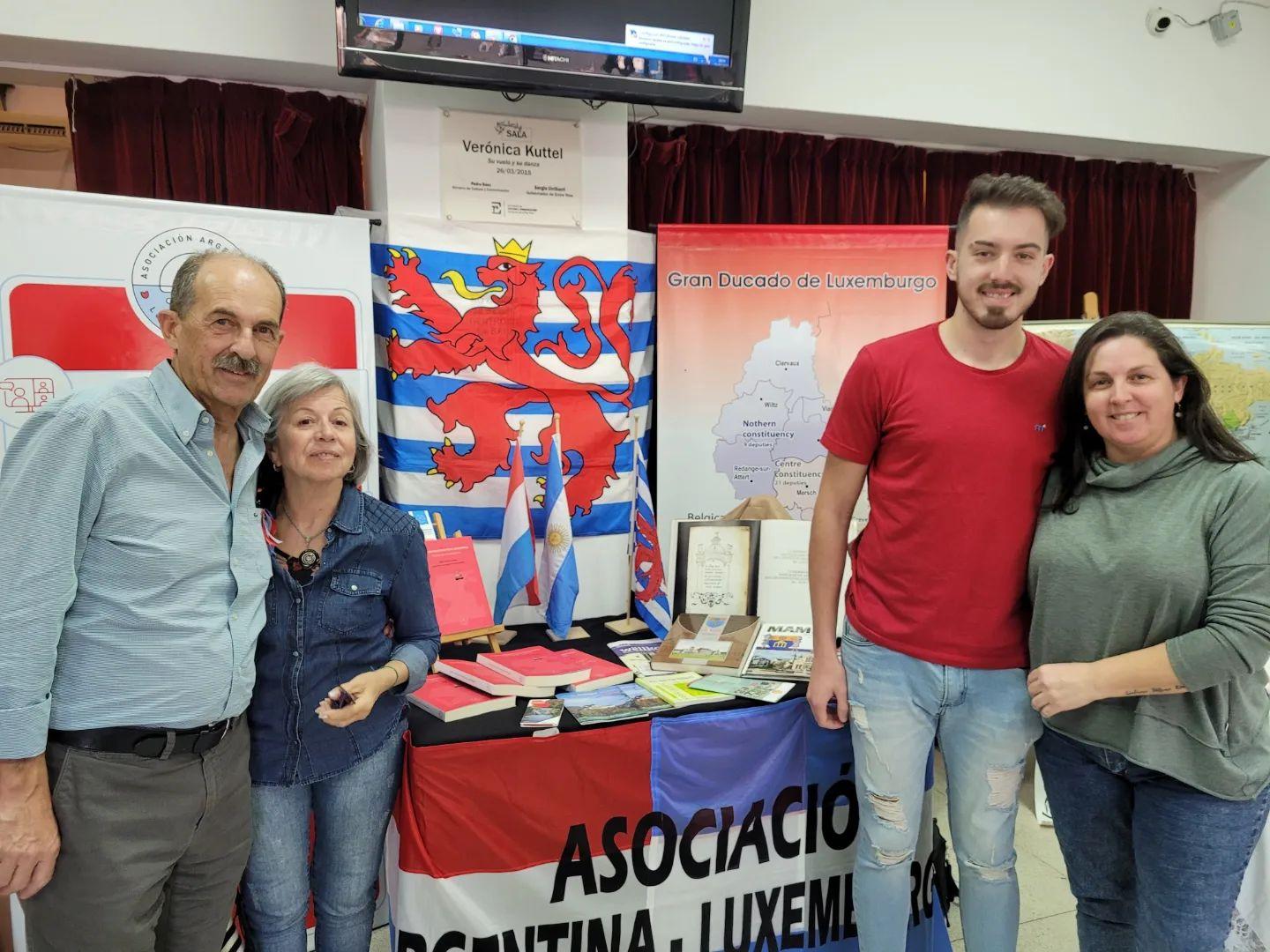
Argentine-Luxembourg dual citizens in front of a booth at a conference

Are you ready to learn more about the Argentine-Luxembourgers?

Continue on to our Argentine Dual Citizens Survey to learn more about the applicant’s motivations and future plans.

Click Below to View Our Other 🇦🇷🇱🇺 Studies:

Ancestors > Dual Citizens > Survey > View All Studies