Join LuxCitizenship for our 10-Year Anniversary Celebration | RSVP Here


The Bureaucracy
Is the Hard Part.
We've Mastered It.
Most people assume the foreign government will be the biggest obstacle in their citizenship-by-descent application. In our experience, it’s usually closer to home.

Citizenship by descent is, at its core, a documentary process. Your eligibility may depend on the laws of your ancestral country — but proving that eligibility depends on navigating a maze of record-keeping systems across the United States and around the world. Over more than a decade and 3,500 cases, Connaissance Solutions has built deep, specialized expertise in the four bureaucratic pillars that underpin every successful application.
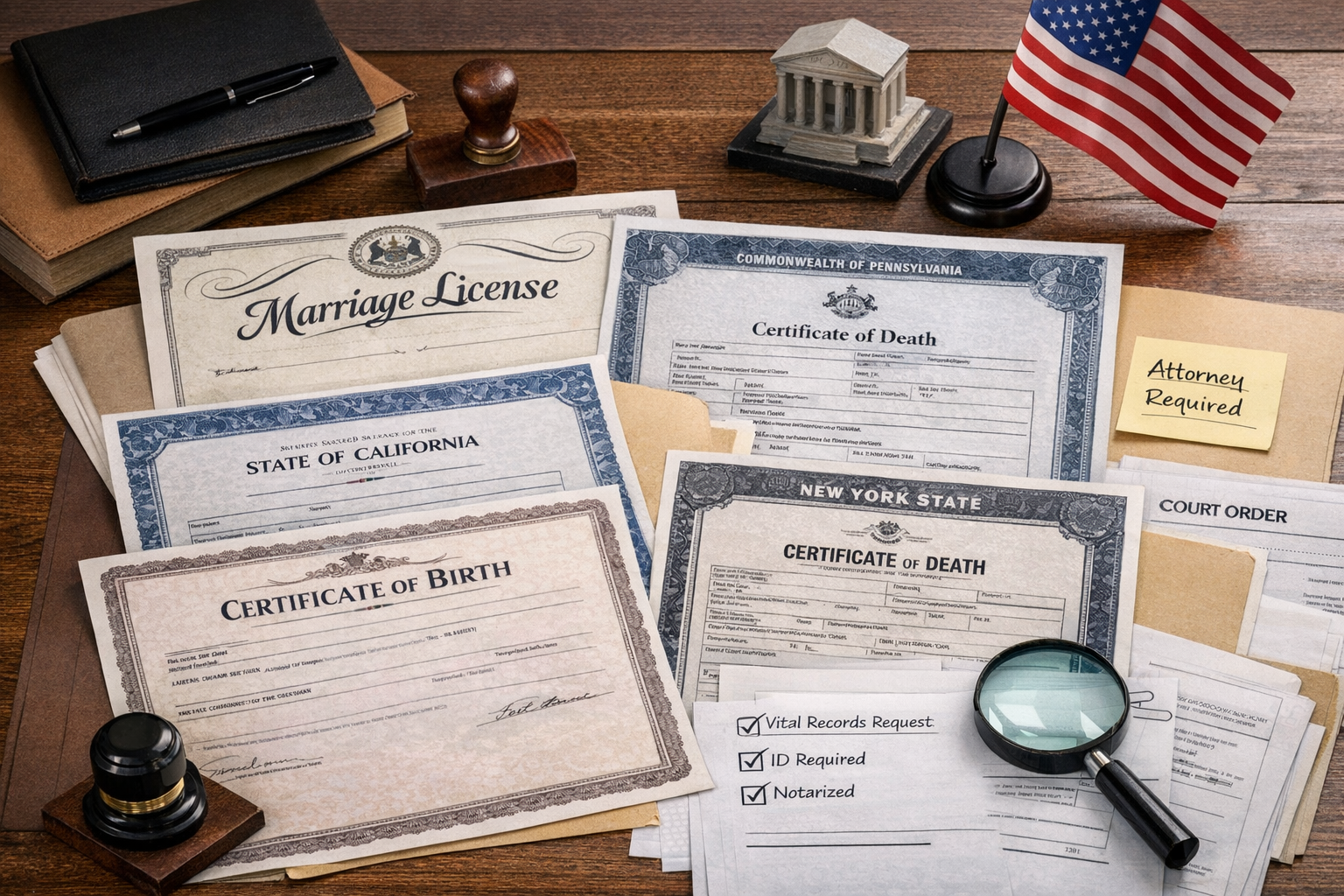
1. U.S. Vital Record Collection :
Our internal vital records database, built over thousands of cases, gives us an institutional memory that no individual applicant could replicate on their own. We know which counties are fast, which are slow, which require notarized requests, and which have recently changed their procedures. This is unglamorous, painstaking work — and it is often the single most time-consuming phase of a citizenship-by-descent application.
2. Foreign Background Checks :
Many countries that offer citizenship by descent require applicants to provide criminal background checks from every country where they have lived — and sometimes from every country where they have been physically present for a certain period. The rules in the receiving country may impose stricter physical-presence thresholds than the actual residency laws of the countries in question, creating mismatches that can be extremely difficult to navigate without specialized experience.
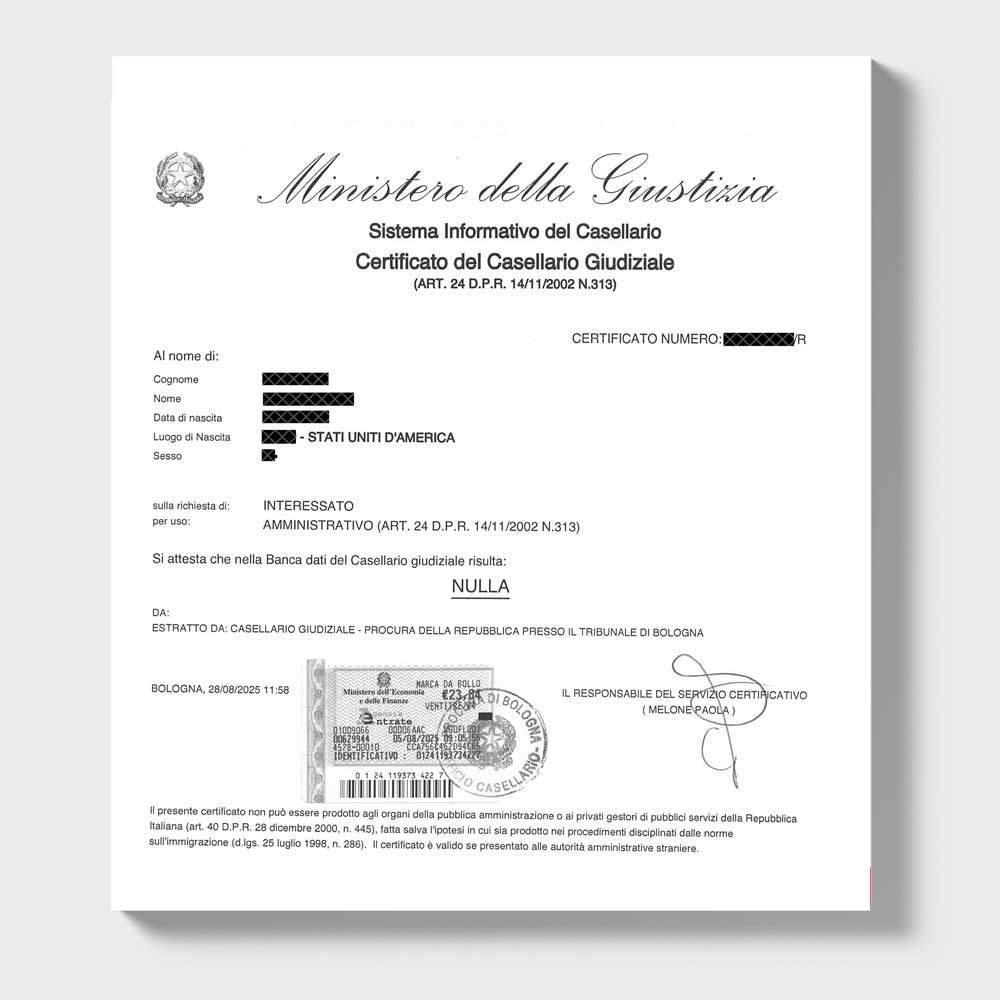
We have helped clients obtain background checks in some of the most procedurally complex jurisdictions in the world. Former American military personnel stationed in Japan — where they were not considered residents but still accumulated physical presence — have needed our help establishing the right channels for a check that most agencies don’t know how to process. We have navigated the notoriously rule-bound Hong Kong background check process, which has historically been so procedurally demanding that some applicants have needed to travel there in person.
Because our founder speaks Mandarin, we have processed dozens of Chinese background checks for clients who lived or worked in mainland China. Our team has also successfully obtained background checks from Vietnam, Singapore, Costa Rica, and numerous European countries for clients of diverse nationalities and backgrounds.
With a team that speaks over eight languages, Connaissance Solutions is uniquely positioned among U.S.-based firms to help Americans — and others who are globally mobile — cut through the bureaucratic and linguistic barriers of foreign background checks.
3. Census Record Research :
When a birth certificate, marriage certificate, or death certificate simply does not exist, the case must be reconstructed through alternative documentary evidence. This is where census records become essential.
Citizenship by descent often requires documenting the life of an ancestor who was born, married, or died long before modern vital record systems existed. In the case of Luxembourg ancestry, the qualifying ancestor may have been born as early as 1815. In parts of the American Midwest, there was no effective compliance with federal record-keeping requirements for decades after such laws were enacted — in Kansas, for instance, consistent vital record registration did not begin until as late as 1913.

We have extensive experience working with both U.S. federal census records and foreign census archives to fill gaps in the documentary chain. Over thousands of cases, we have developed reliable methodologies for locating ancestors in census data, cross-referencing entries across decades, and presenting these records to foreign governments in a way that satisfies their evidentiary requirements. For many of our clients, this research is what makes an otherwise impossible case viable.
4. Ecclesiastical Record Navigation :

Navigating ecclesiastical archives requires a different skill set than working with government agencies. Each parish and diocese has its own policies on access, its own record-keeping conventions, and its own timelines for responding to requests. Some maintain detailed, well-organized archives going back centuries; others require significant effort just to determine whether a relevant record exists.
We have worked with hundreds of parishes and dioceses across the United States and abroad, building the relationships and procedural knowledge needed to locate and obtain these records efficiently. For clients whose cases depend on documentation that predates civil record-keeping — or that was lost to disaster — our ecclesiastical research capability is often the decisive factor in a successful application.
Every Case Starts with the Records
Whether you’re exploring Luxembourg, Italian, or another European ancestry claim, our team can assess what you’ll need and help you get it.