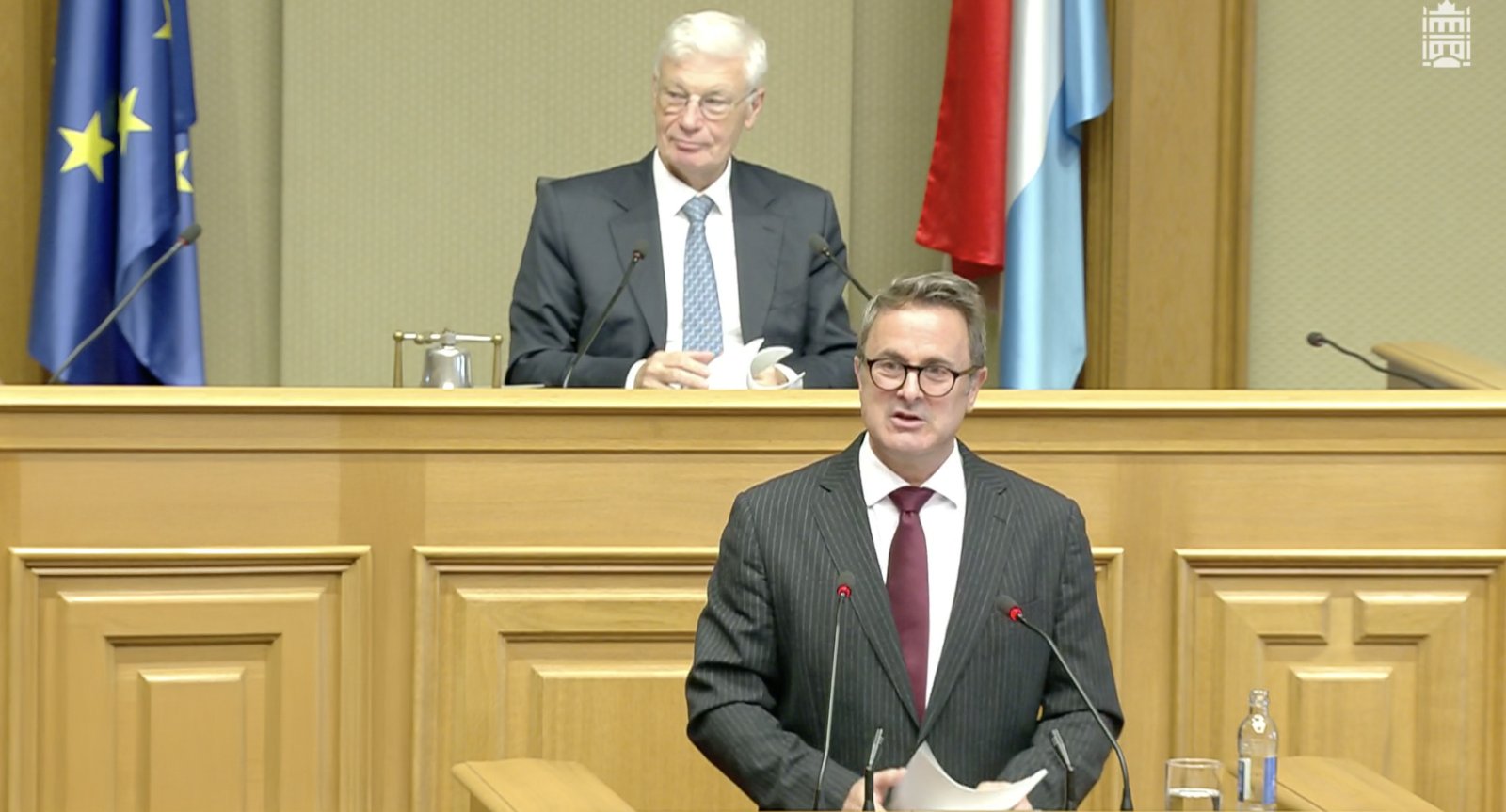
On October 27, 2026, Foreign Minister Xavier Bettel gave his yearly speech on foreign policy to the Chamber of Deputies, which is Luxembourg’s parliament. Minister Bettel was Luxembourg’s prime minister from 2013 to 2023. Since 2023, he has served as deputy prime minister and minister of foreign affairs.
Most of the 90-minute speech was about world affairs. It was organized into sections, some by region of the world and some by theme. About an hour and ten minutes in, the foreign minister reached the section on consular affairs: the work of Luxembourg’s embassies and consulates general, which is where citizens abroad get their passports and other services. That is where he spoke most directly about Luxembourg citizens who live in other countries.

I have been doing this work for ten years. In that time, there have been a few public statements on this subject, and we often speak with officials one-on-one. But as far as I know, this is the most detailed statement in recent years about the so-called “Luxembourg diaspora” from anyone as senior in the Luxembourg government as the deputy prime minister.
The following is an analysis of what the foreign minister said about Luxembourg’s diaspora, section by section: first what he said, then what we can understand from it. The quotes come from an English translation of the speech, which was given in Luxembourgish.
Nearly one in three
“In the consular sphere, I also want to highlight the major challenges and opportunities of the Luxembourg diaspora. The numbers continue to rise, bringing a considerable workload for our consulates. In 2024, I told you that 28.5% of all Luxembourgers lived abroad; in 2025, it was 30%; now, in 2026, we will reach 31%. We are talking about more than 165,000 people in total. For example, we have reached over 34,000 Luxembourgers in Brazil and 23,000 in the USA, with numbers rising sharply.”
For context, Luxembourg has about as many people as a mid-sized American city. On a map, it is around the size of Rhode Island. When nearly a third of its citizens live somewhere else, and that share grows every year, it shapes how the country thinks about itself.
Who are the citizens abroad?
It would be easy to assume that most Luxembourg citizens abroad got their citizenship through ancestry. That isn’t the case. Citizens in the United States, Brazil and Argentina, most of whom have their citizenship through an ancestor, make up roughly one in ten Luxembourg citizens (see our government data page).
The other two in ten are Luxembourgers who moved abroad for one reason or another. Luxembourg is an expensive place to live, and housing is a real challenge. Many families find more affordable housing options, or something else they’re searching for, just across the border in France, Belgium or Germany, and they commute into Luxembourg for work.
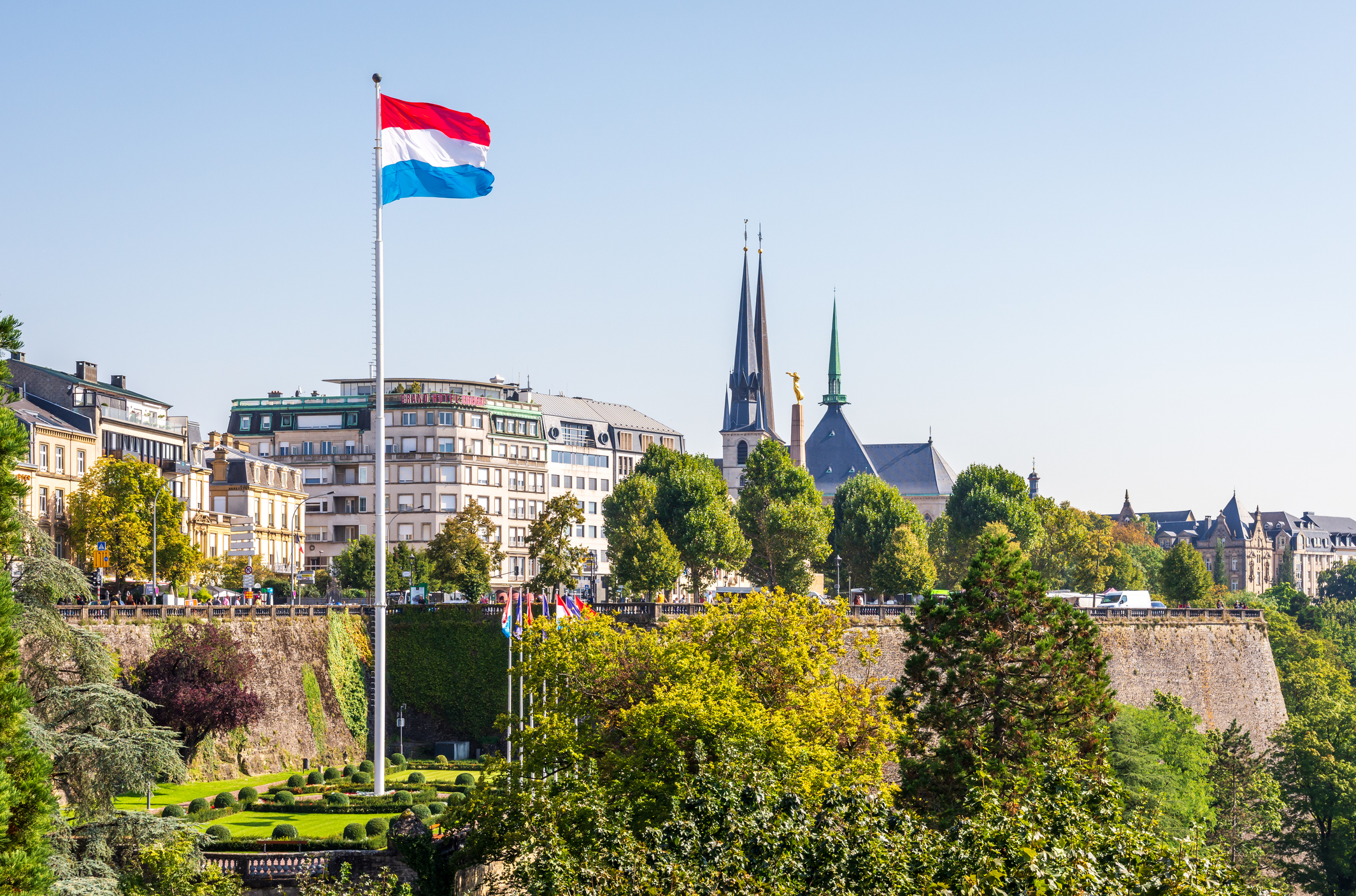
Others have gone further. Studying abroad is a long tradition. Luxembourg had no university of its own until the University of Luxembourg was founded in 2003, so generations of students went to Germany, Belgium, France and beyond. That is changing: this year, for the first time, Luxembourg itself became the top study destination for students from Luxembourg’s resident families who receive state study aid. Still, many who leave for school or work end up building their lives elsewhere.
Questions beyond one ministry
“Nationality law and voting rights do not fall within the remit of the Ministry of Foreign Affairs. But these are issues on which we cannot bury our heads in the sand.”
The rules on who can become a citizen, and on how citizens abroad vote, are set by other parts of the government. But the foreign ministry deals with these subjects every day. Its embassies and consulates general publish information about citizenship and voting, answer questions from citizens abroad, and see firsthand how these rules play out in people’s lives. That is what the foreign minister means: even if the decisions are made elsewhere, his ministry can’t look away from the reality its staff work with.
The government is analyzing the diaspora
“Having a diaspora also offers opportunities that the Ministry of Foreign Affairs is working to identify and make better use of, as provided for in the coalition agreement.”
This is an important sentence. The coalition agreement is the official program the governing parties agreed on when they formed the government. By pointing to it, the foreign minister made clear that studying the diaspora is a formal government commitment, not a passing remark. His ministry is actively analyzing what the diaspora means for Luxembourg and how to work with it.
Citizens through ancestry
“There are great opportunities for us in the immense interest in Luxembourg shown by those tens of thousands of people, particularly on the American continent, even though many of them have no other connection to our country than an ancestor who emigrated in the 19th century. The appeal Luxembourg holds for these people connects Luxembourg with the countries where they live, offers great opportunities for networking in the cultural and economic spheres, and also helps to project a positive image of our country on other continents.”
I believe that for citizenship to have real meaning, there needs to be an effective bond between a country and its citizens, not just an emotional one. In this passage, the foreign minister reflects a view that is widespread in Luxembourg: that the only real link between the country and these new citizens is an ancestor who left in the 19th century.
It is impossible to ignore that a good part of our clients come to us after discovering their Luxembourg ancestry through genealogy, or knowing only a little about the story of their great-grandparents. But in our experience, once people discover a family history they never knew about, many become deeply attached to Luxembourg. The foreign minister has said so himself. In February, he told RTL that “these people are more Luxembourgish than we are.”

Citizenship is a journey. The foreign ministry can’t keep its head in the sand on this subject, because it deals with these citizens in its day-to-day work. But in large countries like the United States and Brazil, the state is far away from its citizens, while in Luxembourg it is part of everyday life. Diplomats mostly meet new citizens at the moments when they need something from the state, at one specific step of their personal journey.
With so many new citizens, people are at every stage of life, and each one approaches this connection as their time and means allow. That shouldn’t be reduced to one dimension. Practical barriers matter too. Because of FATCA, a US law that requires foreign banks to report on their American customers, many Luxembourg banks turn away US clients. That makes it very hard for American dual citizens who don’t live in Luxembourg to open a bank account there. Many people have been held back from taking their first steps toward a life in Luxembourg by complex rules and strict checks by banks and other institutions.
In the same passage, the foreign minister named three benefits these citizens bring: ties between Luxembourg and the countries where they live, cultural and business networking, and a positive image of Luxembourg on other continents.
What we can understand from the speech
“We have already issued 10% more passports than last year, and this year we will exceed 60,000. This is explained, among other things, by the number of Luxembourgers, which is also growing strongly abroad, but also because many people wanted to obtain the new passport that we introduced in May.”
Behind the foreign minister’s words about a “considerable workload for our consulates” is a real practical challenge. To keep up, Luxembourg has had to add consular staff in expensive cities like New York, Washington, San Francisco and Brasília. That takes money and planning, and the growth is moving faster than anyone can easily predict. For a country the size of a mid-sized American city, resources are not unlimited.
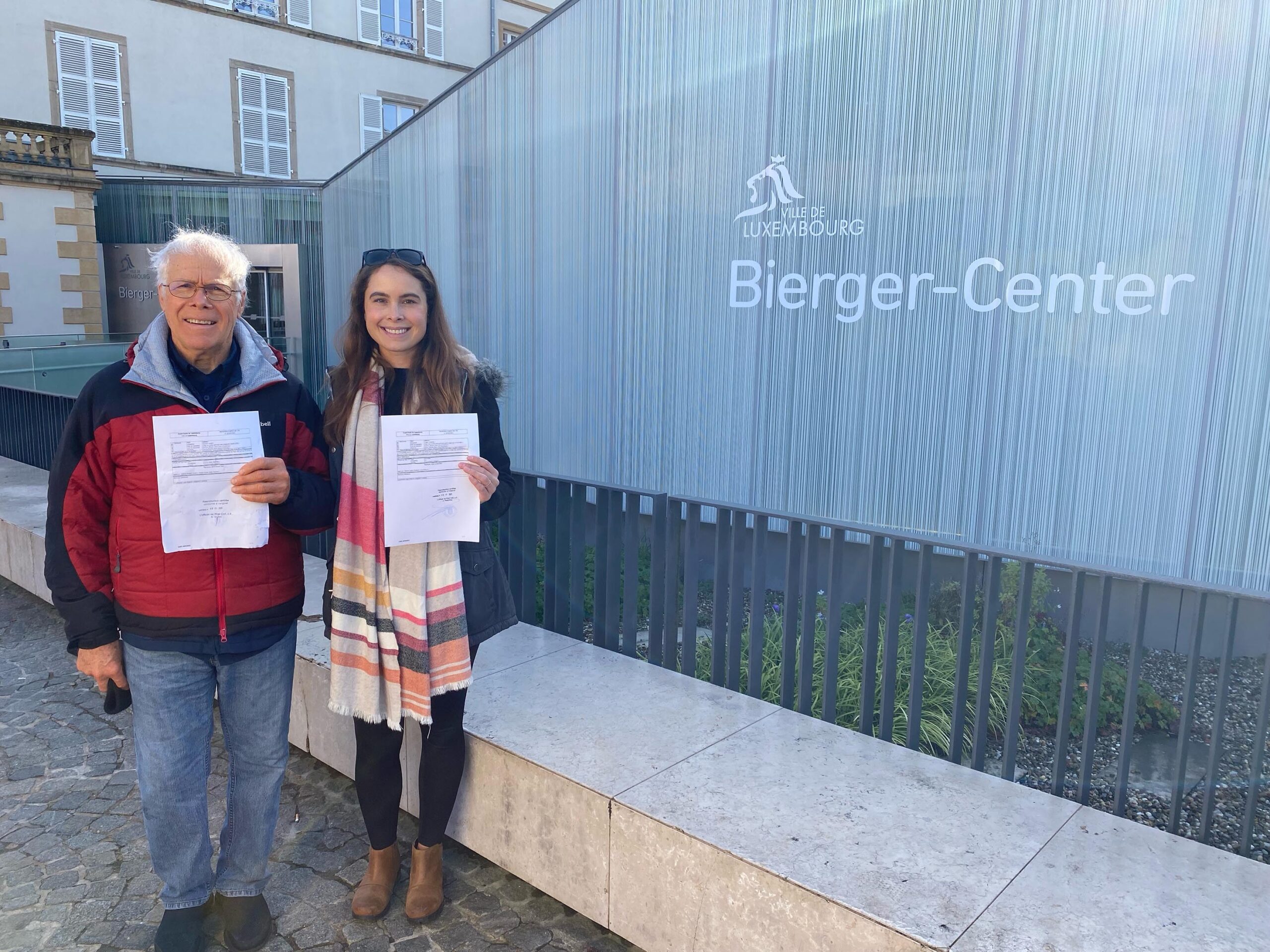
Adding so many new citizens, each with their own life situation, has also meant changes in how things work at home. One example: in Luxembourg, spouses don’t usually change their names when they marry, while many Americans and Brazilians do, and the system has had to adapt. The Bierger-Center, Luxembourg City’s citizen service center, has also introduced an appointment system to handle demand for citizenship applications. Changes like these have a real cost, and they are happening quickly, at a time when a lot else is going on in the world.
There is also the question of who is in charge. As the foreign minister pointed out, his ministry doesn’t cover every subject that citizens abroad touch. Nationality, voting, culture, the economy and public services all sit with different parts of the government, and there is not yet one structure that looks at the whole picture. His ministry is working on it from its own point of view.
So for the government, the growing diaspora is both a challenge and an opportunity. It is making real changes to serve these citizens, and it is natural for it to hope for a real connection with them in return. The foreign minister’s speech points to what that connection can look like: culture, networking, business, and a positive image of Luxembourg around the world.
Why the timing matters
The speech came just a few weeks after a new release of official numbers. Luxembourg’s National Register of Natural Persons (RNPP), the official register of everyone living in Luxembourg and of Luxembourg citizens abroad, published updated figures in early October covering the period through September 30, 2026.
Those numbers show the same trend the foreign minister described. Between July and September 2026, the number of Luxembourg citizens living in the United States grew by 952. That’s about 10 new citizens a day. Germany, by comparison, added about 2 a day. As a result, the US passed Germany in early July to become home to the fourth-largest community of Luxembourg citizens in the world, with 23,690 people. Only France (36,653), Brazil (34,288) and Belgium (29,173) have more.
The longer view is even more striking. In 2018, about 3,600 Luxembourg citizens lived in the United States. Today there are more than six times as many.
This growth continues even though one of the main routes to citizenship closed at the end of 2025.
In other words, the “numbers rising sharply” that the foreign minister mentioned are not slowing down. You can see the full figures, updated each quarter, on our government data page.