We’re starting a new Staff Spotlight series so you can get to know the people on our team — the ones who review your files, book your appointments, and help your case move forward at every step.
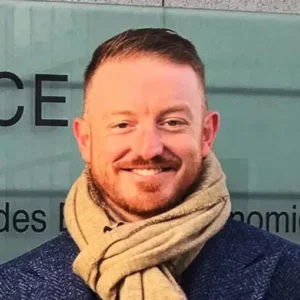
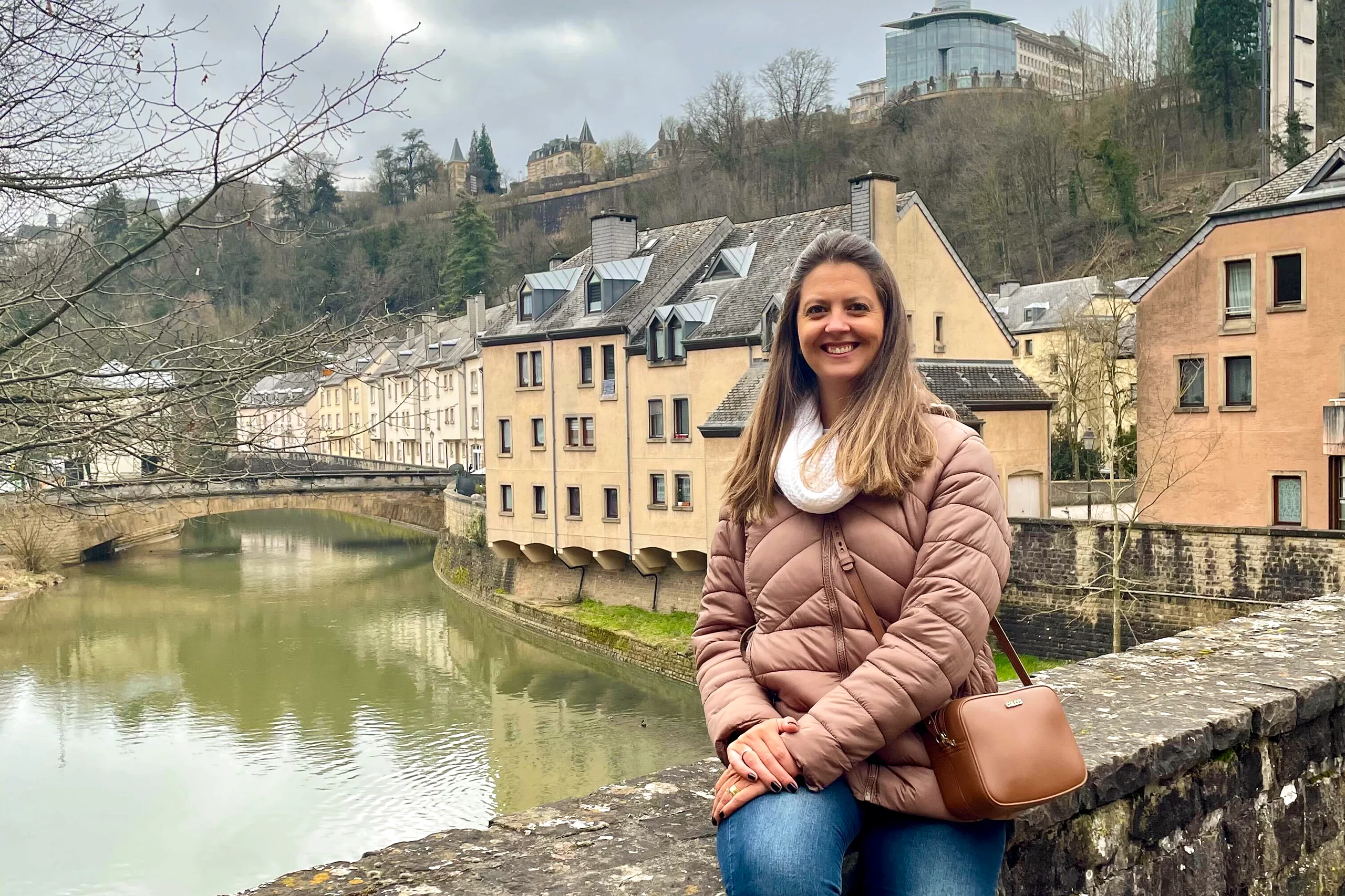
First up: Barbara Davet, who joined us in August 2025 as a Case Manager. Barbara is a lawyer from Brazil. Like many of our clients, she reclaimed Luxembourgish citizenship herself before joining our team.
— Daniel Atz, Founder
Where are you from?
I’m from Brazil, where I worked as a lawyer. In 2023, I moved to the United States for my husband’s work. I kept working remotely with my clients in Brazil while looking for opportunities here.
My connection to Luxembourg is something I claimed back myself — I’m a Luxembourgish citizen under Article 89 — and I know firsthand what that journey feels like. It’s more than legal rights. It’s a personal rediscovery. That’s part of what brought me into this work.
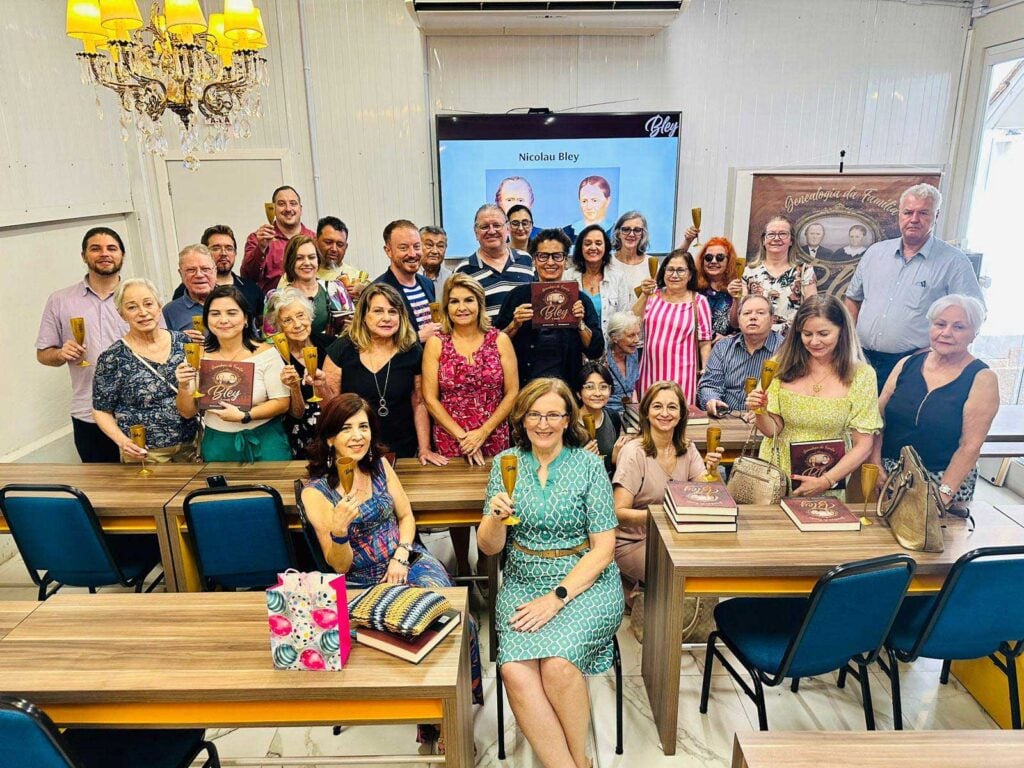
Barbara’s ancestor was one of many Luxembourgers who left the country in the 1800s for southern Brazil. The state of Santa Catarina, where he settled, became home to a close-knit Luxembourgish community. Their descendants — now several generations down the line — are one of the biggest groups reclaiming Luxembourgish citizenship today.
Tell us about your ancestor.
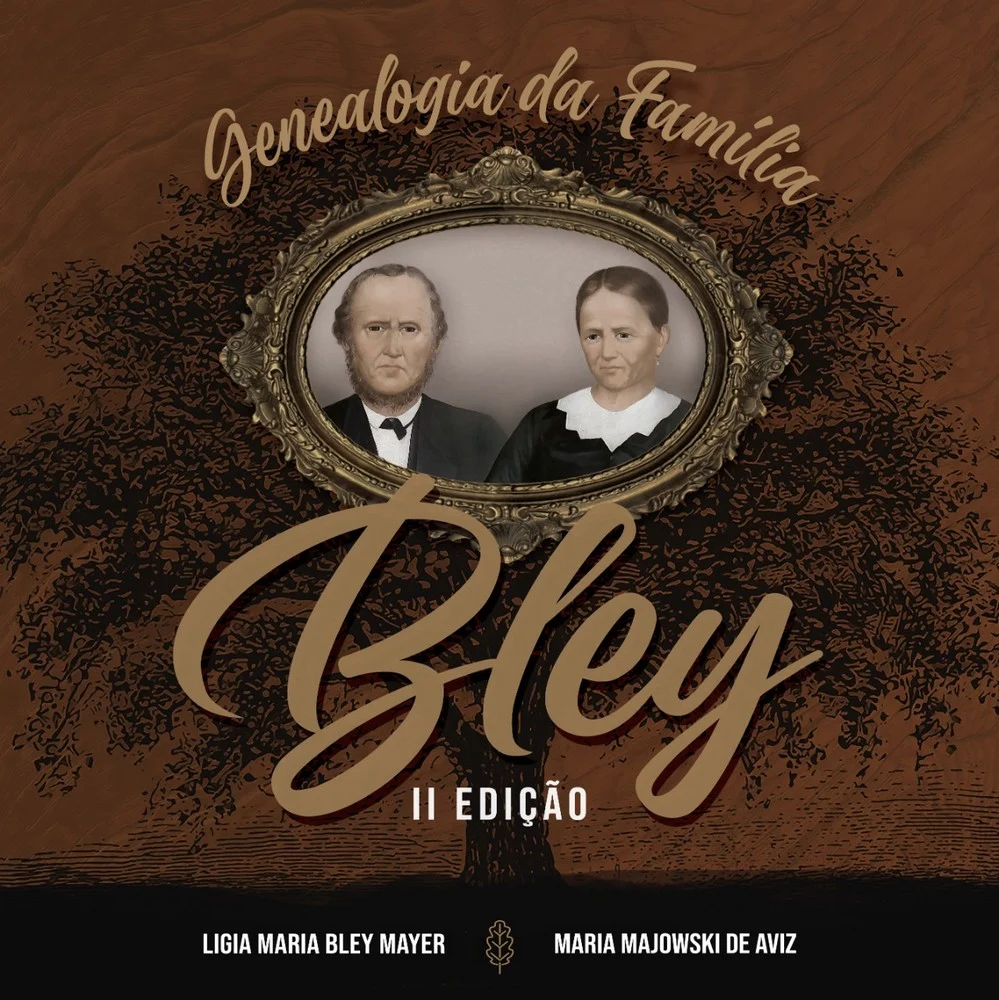
His name was Nicolau Bley. He’s about five or six generations back on my father’s side of the family. I don’t know a lot about him personally — when I reclaimed the citizenship, I had a cousin who had already done most of the family tree research. But I know he came to Brazil with his mother, settled in Santa Catarina State, and had some kind of political career there.
Was there a personal side to your search too?
Yes. I lost my father when I was three years old, so I don’t have memories of him. Looking into citizenship led me to discover some family secrets — things about my father and my grandmother I had never known. It became a way to feel more connected to his story and to this side of my family.
Years earlier, Luxembourg had opened a window for descendants of people who had lost their Luxembourgish nationality long ago. That window was set to close at the end of 2018. The final months brought a rush of Brazilian applicants, including Barbara, racing to file in time.
When did you start the process?
I started in October 2018, very close to the deadline. I had seen a newspaper article, I recognized the family name “Bley,” and I began the research. I gathered the documents, worked with someone in Luxembourg on the case, and in 2022, I traveled to Luxembourg City for the declaration appointment.
What was Luxembourg like?
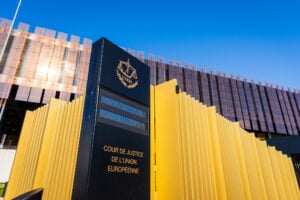
I loved it. It’s a wonderful place. I visited the museums, trying to understand the history and see if I could find anything about my own family. And something really special happened while I was there. I had a friend who had also reclaimed his citizenship and was living in Luxembourg. When we compared our family lines, we found out we’re almost cousins.
What did you do in Brazil before moving here?
I worked as a government attorney at CREA-PR, based in Curitiba. It’s the state agency that licenses engineers, agronomists, and related professions in Paraná, one of Brazil’s states. My work focused on the legal side of agency operations. That meant handling court cases involving non-compliance and fines, drafting and reviewing legal documents, and making sure our actions were legally sound — so they would hold up to critical evaluation and tests.
In short, Barbara spent years learning to read paperwork closely, catch small errors, and build decisions that could stand up to a challenge. That same instinct is exactly what her current work calls for. Catching a small problem in a 150-year-old record can be the difference between a case moving forward and a case getting stuck.
A lot of what we do is, at heart, a paper chase. American clients often spend months gathering birth, marriage, and death certificates from different US counties and states — each with its own forms, fees, and rules about who is even allowed to obtain a record.
How is it different in Brazil?
Getting certified vital records is much easier and faster in Brazil than in the US. It’s much more straightforward.
How does the Brazilian system work?
There’s a central website. You type in some information about the person, and the system tells you where their record is held — which city, which clerk’s office. That’s really helpful, because sometimes you don’t know the state or town where a relative was born or married. Once you’ve found the record, you can usually order it directly by email. You pay the fee and the shipping, and the document arrives at your home. Though not all clerk’s offices are connected to the system, especially those in smaller towns. In those cases, you may need to contact the office directly by phone, and the process can take longer.
Can someone else order records for you?
Yes. Vital records in Brazil are public, so we don’t have to explain why we want them. A third party can order them for you without giving a reason. Because of privacy laws, in some US states, you have to explain why you want a record, or prove you’re related to the person on it, just to get a copy.
By the time a file reaches Barbara, a client has often spent many months, sometimes the better part of a year, pulling those American records together. Her job is to make sure nothing falls through the cracks before the file crosses the Atlantic.
What does your work at LuxCitizenship involve?
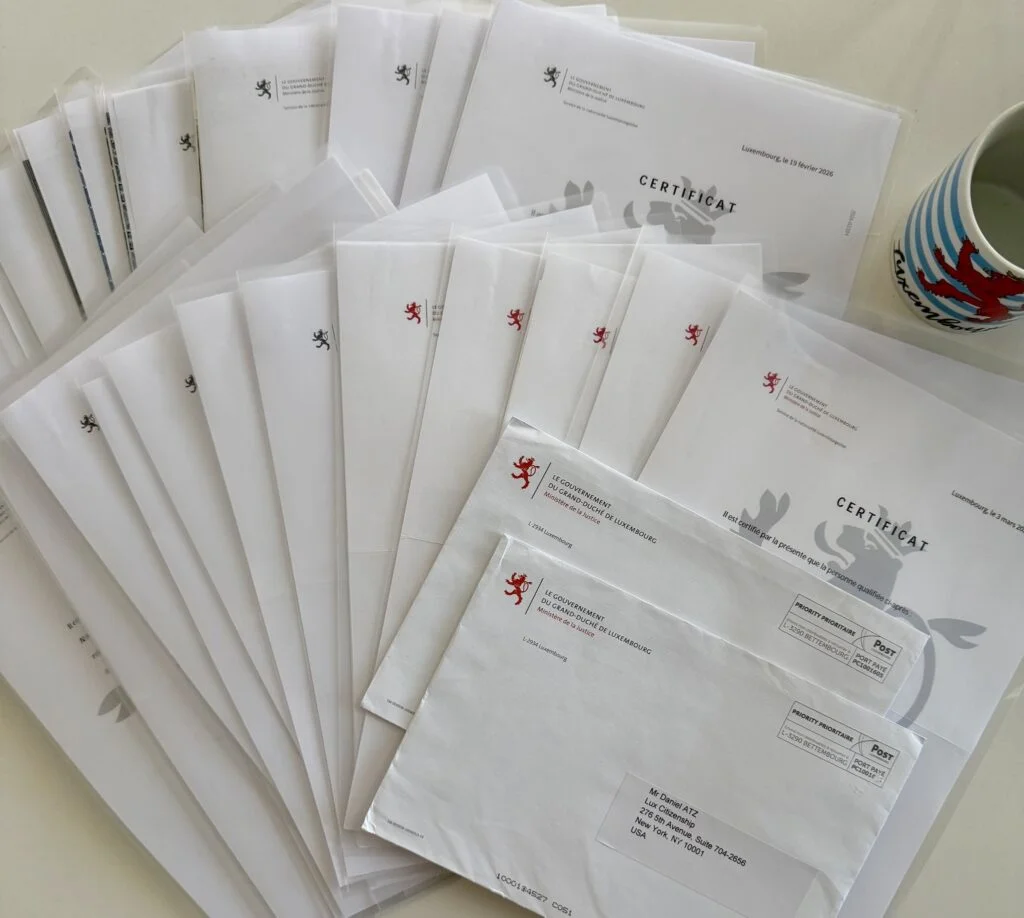
I review and approve client applications before they go to Luxembourg. I also manage Phase 2 of the citizenship by option process. That means closely reviewing Biographic Notices and background checks, booking the citizenship declaration appointments in Luxembourg, and reviewing the citizenship certificates that come back for our clients.
What’s it like telling clients their certificates have arrived?
It’s the best part of the job! Clients are so grateful and so happy. They tell me, “Now I need to plan a family party to celebrate.” That’s the moment when you can really feel that our work matters.
You’ve reviewed over a thousand documents. What stands out?
The Indonesian documents are beautiful — the paper, the design. I recently saw a death certificate from Israel, and it was fascinating — the way the language is written, at first glance the certificate almost looks upside down to my eyes.
But the stories are what really stay with me. I especially remember cases where a client discovers some family secret they never knew. I feel a personal connection to those, because the same thing happened to me.
One case that sticks with me involved an ancestor who had been adopted in the US, so her name was changed. The birth certificate had one name, the marriage certificate had another, and the passport had a third version. It was very complicated — we haven’t closed that case yet.
What do clients say when they get their certificate?
Many of them say they feel closer to their own history, or that their parents and grandparents would have been proud. Some say this citizenship could open doors for their children and grandchildren. It’s a kind of hope they’re passing on to the next generation. It’s a beautiful thing to be part of.
For more information about the LuxCitizenship team, please visit our About Us page.