
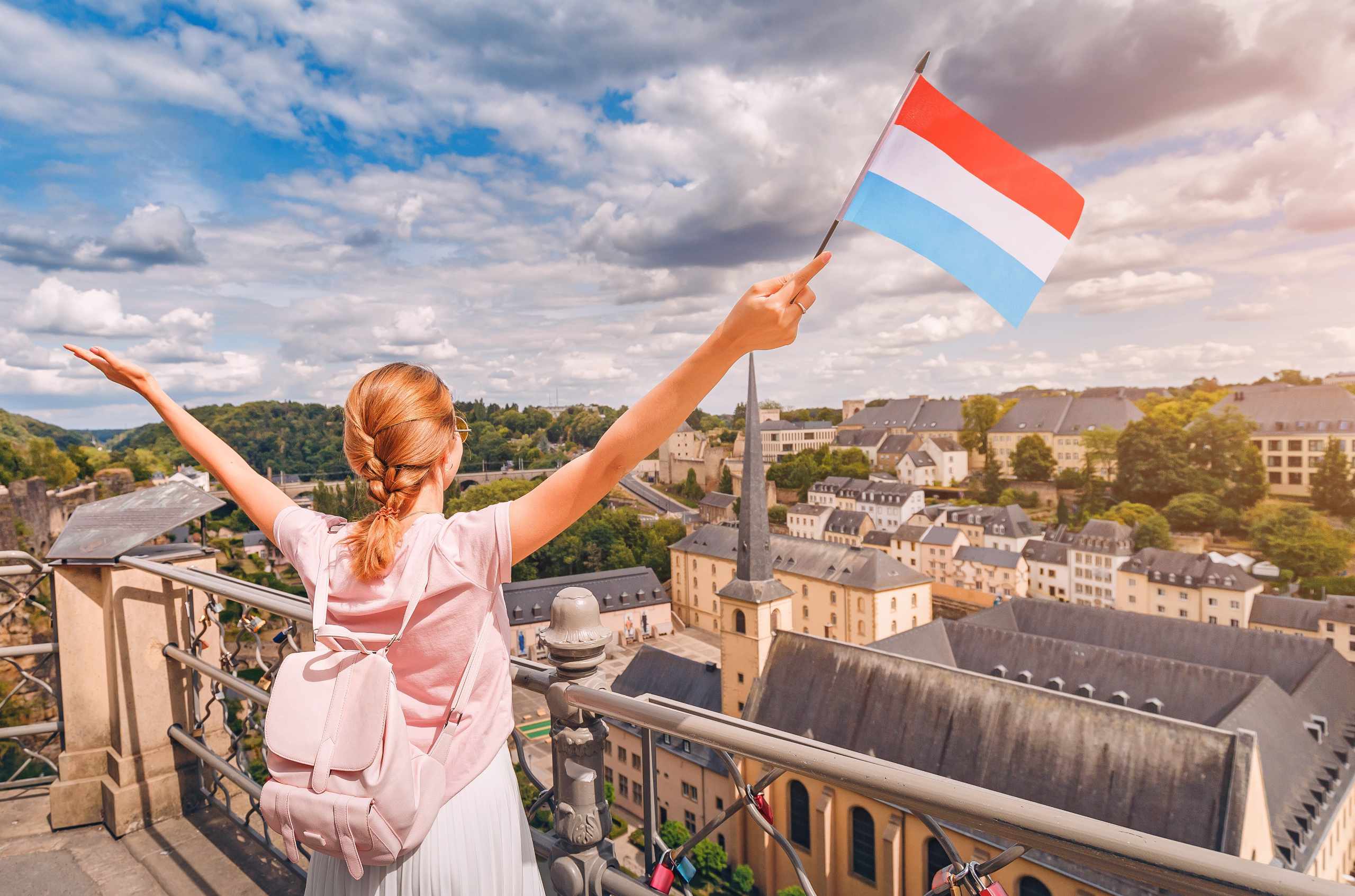
Luxembourg City is a true melting pot. Like any major city in the world today, you might stroll through its streets and hear a multitude of languages. Is it possible to survive in Luxembourg with only English? Absolutely! However, not learning at least the basics of another language while living here could mean missing out on much of the experience. You’ll want to join the polyglot crowd around you, share inside jokes, and even try your hand at faking accents.
With over 170 nationalities living in harmony, Luxembourg boasts three official languages (French, German, and Luxembourgish), while Italian and Portuguese are also widely spoken. Some documents in English, such as employment contracts, may not require translation. This multilingualism is the result of a long and fascinating history.
Luxembourg has been shaped by the major European powers and labor force migration over centuries. In 1804, the adoption of the Napoleonic Civil Code made French the official legal language. In 1843, children began learning the alphabet in German at age six. In the 19th century and again after 1945, Luxembourgish experienced a renaissance as a language of national and cultural identification for Luxembourgers.
How does this translate into practical life and education?
Finding a school in Luxembourg can be challenging. You can choose from several different systems, each with its own particularities: local traditional schools, local international schools, and private schools. The first two (traditional and international public schools) offer free tuition, but admission is competitive. Private schools, on the other hand, require both availability and the means to pay tuition.
Your future plans matter. Depending on the student’s abilities, the local system schools may be directed toward a classical, general, or vocational track. Classical and general diplomas provide relatively easy access to higher education. However, if your child plans to attend university or higher education abroad, they will need to go through an equivalence procedure using an evaluation service like the National Association of Credential Evaluation Services (NACES).
The European Baccalaureate grants easy access to European higher education institutions. In both local and European Baccalaureate schools, languages are a core component of the curriculum. Before the age of 11–12 (primary school), students are already exposed to two or three languages. In European Baccalaureate secondary schools, the second language becomes particularly important, serving as the language of instruction for subjects like history and geography.
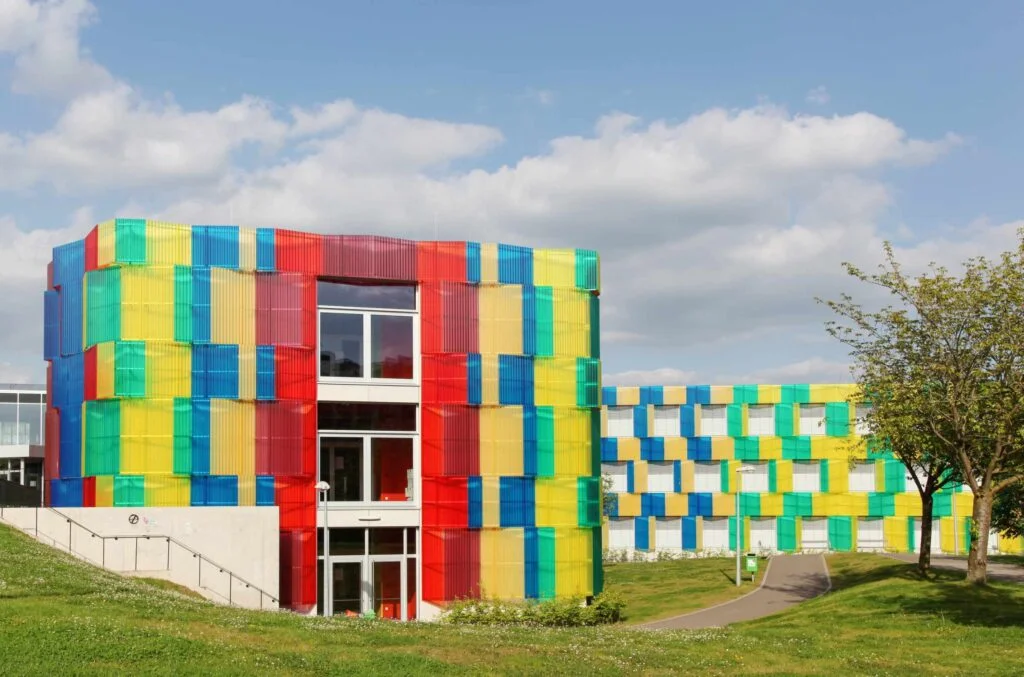
If Luxembourg is just a stepping stone and you plan to return to an Anglophone country, schools offering the International Baccalaureate or A Levels are the best option. There are fewer of these, but options include the International School of Luxembourg (ISL), Saint George’s, and others in the private sector, as well as the public Lycée Michel Lucius (LML). English is the main language, and while students are introduced to other languages, the focus is less intense than in European or local systems.
All public international schools have Luxembourgish classes in the curriculum, which is a great way for students to participate in local after-school activities and integrate in the local life. It is very helpful to attend the open house events or check the online tours some of them offer.
For any child with no knowledge of German, Luxembourgish, or French, “Classes d’Accueil” (welcome classes) may be necessary until their language skills are strong enough for regular school. International schools tend to be more flexible, but admission depends on the child’s age, grade, language level, and availability due to the very high demand.
Luxembourg is also home to a fast-growing university, which has already ranked in the top 20 young universities according to the Times Higher Education ranking. The government recently announced a €2 billion investment in the university and research centers. Most diplomas are offered in French, English, or German, but many require a very high level of proficiency in all three languages.
For adults, the municipalities (commune) offer language classes and there are many ways to learn not only the official local languages but also others (Chinese, Korean, Portuguese, Italian, etc.) at the Institut National des Langues de Luxembourg (INLL), which offers excellent value for money. Local association and neighborhood associations also provide language courses, and some cafés host language evenings where you can practice with others over a drink – usually one language per table. It’s a wonderful way to improve your skills in a relaxed setting.
Planning to relocate to Luxembourg? If you’re curious and open-minded, it could be the best experience of your life. Challenging, yes, but extremely rewarding and life-changing for your children.